
What a Handshake Can Teach Us About Leadership
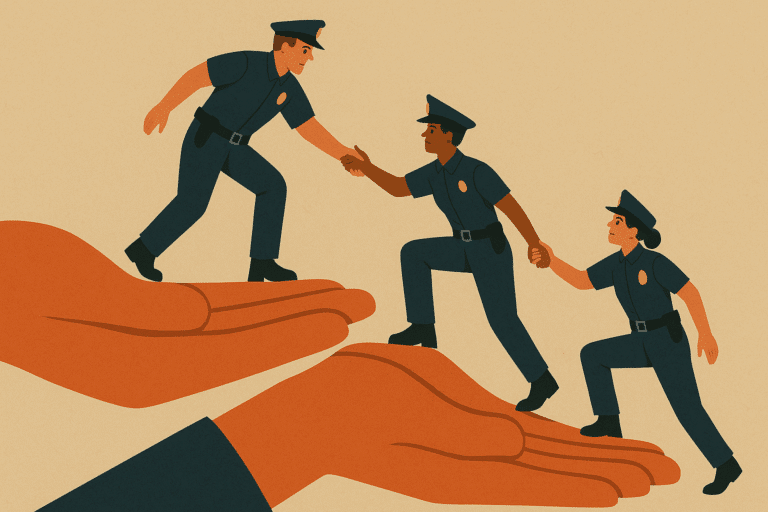
Last weekend, I had the privilege of speaking to a room full of high school students. Bright, eager, and genuinely curious about leadership and public service. As I walked in, the facilitator was teaching them how to shake hands. Not just a handshake, but a good one; eye contact, presence, posture. A handshake that says, “I see you.”
It made me smile. Because that’s an important life and leadership skill. A small but meaningful one. And it got me thinking:
Who teaches new leaders the equivalent of a handshake?
Who teaches a newly promoted sergeant, manager, or chief/sheriff how to create trust in a room?
How to listen with intention?
How to speak with clarity instead of dominance?
In policing, and really across public service, we often promote people based on their technical skills. They’re great tacticians. They know the job. They passed the test. So we hand them new stripes, bars or stars and expect them to lead and inspire.
But leadership is not automatic. And technical skills don’t always translate to leadership skills. That’s like assuming a good cook will naturally run a great restaurant.
Leadership is learned. And just like those high school students, most need someone to teach them about real world equivalents to confident handshakes. New leaders need someone to teach them what real leadership looks like.
Things like:
- How to facilitate a meeting so people feel heard, to encourage different perspectives without fear
- How to know their own blind spots and biases and apply wisdom, not just knowledge
- How to read the room and create psychological safety around decision making
- How to navigate difficult conversations without shutting people down
- How to lead through influence, not intimidation
I’ve worked for and been around many new leaders so it becomes quite evident who’s faking it till they make it versus who’s comfortable in their own leadership skin. The former know some degree of procedure or policy, but they didn’t know how to build a safe space for input. They don’t know how to ask good questions, how to pause and truly listen, or how to own mistakes in front of a team. The latter exude confidence because they understand they don’t know it all but that those in the room likely have the answers as long as arrogance and ego don’t get in the way.
And the cost of that gap was real. Missed insights. Eroded trust. Quiet rooms that should have been full of collaboration.
We cannot keep assuming that people will pick up leadership through osmosis. Or that one promotion magically unlocks wisdom.
As we wrote in a previous post:
“Leadership wasn’t about being the best cop in the room. It was about helping others become their best. It was about relationships, not reports. Influence, not authority. Listening more than speaking.”
It still is.
So if you’re a new leader, or mentoring one, don’t focus only on technical expertise. Focus on presence. On people. On the small moments that build trust. Lose the ego and be teachable.
Let’s normalize teaching leadership like we teach handshakes. Early, intentionally, and with the humility to know that we all have room to grow.
Because the job isn’t just about what you know.
It’s about how you lead when it counts.