
We Don’t Choose the Kitchen
Rank doesn’t make you a leader. Your ability to shape the culture does.
A few months ago, I flew to France for my friend Melissa’s wedding. It was held at a beautiful chateau in the countryside, the kind of place that looks like it belongs on a postcard, with stone walls, long tables, and vineyards in every direction. Then, at the last minute, the caterer canceled. Every meal for the next few days was suddenly up in the air.
We had a chateau full of guests who’d traveled across the world, and no easy fix (because when you’re in the French countryside, you can’t just DoorDash your way out of it).
The rescue came from the guest list
One of the guests, a friend of mine named Ashley, called her business partner, who happened to be a French-trained chef. Then she called her cousin, who happened to be an English pastry chef.
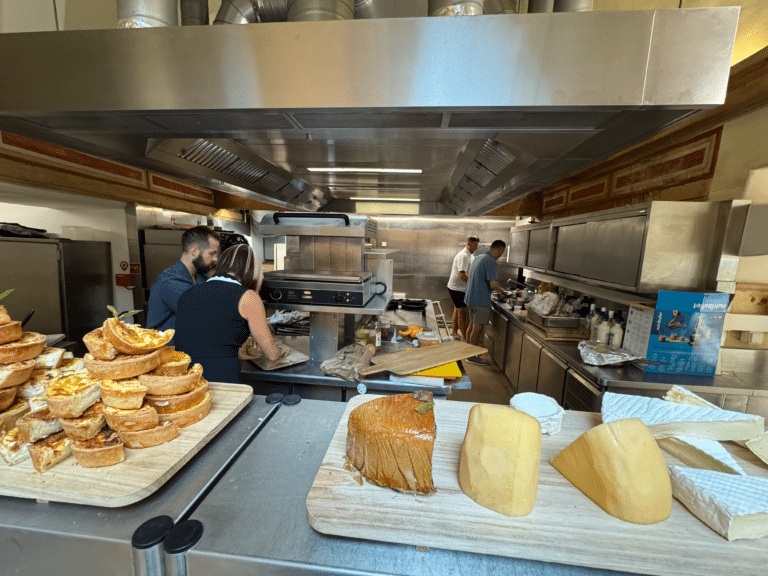
The chateau had a fully equipped professional kitchen, so the two chefs took charge, and a group of us guests rolled up our sleeves and went to work.
It wasn’t pretty. The kitchen was hot, it was loud and frantic, and I had no business cracking and whisking six dozen eggs. There was yelling, the kind of yelling you’ll hear in any real professional kitchen when the pressure is on and the clock is running. In the middle of it all, the French chef (who is an AMAZING guy and taught us so much about food, wine, and the culinary history of the area) was yelling at a guest named Bridget.
Then Bridget turned around
I was waiting for her to shrink, snap back, or walk out. Instead, she turned around with a huge smile on her face and exclaimed to the whole room, “We’re in France, cooking with a French chef… in a chateau! It’s like we’re on a reality show! This. Is. Awesome!”
The room changed. Nothing about the situation was different. Same heat. Same chaos. Same chef. But in one sentence, Bridget took a stressful moment and turned it into an adventure, bringing the rest of us with her.
She didn’t try to calm anyone down. She took the adrenaline everyone was feeling and called it excitement.
Perspective. Is. Everything.
We don’t choose the kitchen. We choose how we stand in it.
Every organization runs on teams, and every team has its struggles. Staffing is short. There’s always something to complain about. Team cultures can be toxic. Someone gets yelled at who didn’t deserve it.
In those moments, every one of us has a choice between two perspectives: We can grumble, dig in, and let the frustration spread to others (which often takes morale from bad to worse). Or, we can step back and see the opportunity sitting right in front of us.
Notice who made that choice in the kitchen. It wasn’t the person in charge. Bridget was the one getting yelled at. She had no title, no authority, and not much say in what was going on. And yet, she still set the tone for the whole room.
Perspective isn’t something only the manager, chief, or sheriff gets to decide. It belongs to everyone on the team.
Standing still is still a choice
Most of us don’t wake up and decide to be negative. We certainly don’t start our careers aiming to be bitter and angry as time goes on. We just don’t decide anything at all. We stay where we are.
But staying where we are has a direction. Left alone, frustration doesn’t stay neutral. It grows and becomes the grumbling at roll call, the eye rolls in meetings, or the quiet toxicity that slowly becomes “just the way it is here.”
That’s culture by default. And default is rarely kind, or much fun to work in.
The good news is that the opposite is also true. One person choosing a different lens can shift a room, and a team. Bridget proved it with her smile and excitement.
Rank doesn’t make you a leader. Your ability to shape the culture does.
Choosing your perspective doesn’t mean pretending what’s broken isn’t broken. It means refusing to let it decide who you’ll be. And if you’re the one in charge, it means remembering that the responsibility for creating the culture “in the kitchen” is yours. Rank doesn’t make you a leader. Your ability to shape the culture does.
What this means for you
You won’t always control the call, the assignment, the budget, or the person yelling at you. Nobody hands you the right perspective, and nobody can take it from you either.
Viktor Frankl, who survived the Nazi concentration camps, wrote about this in his book Man’s Search for Meaning. He called it “the last of the human freedoms,” the ability to choose your attitude in any set of circumstances.
So ask yourself:
- What situation am I in right now that I’ve been treating as a burden?
- What would it look like if I chose to see the opportunity in it?
- Who on my team is watching to see which perspective I pick?
Every day, regardless of the circumstance, the choice is yours.
Choose it on purpose.
Chris Hsiung serves as Executive Director of the Curve and Undersheriff for the San Mateo County (CA) Sheriff’s Office