
“We hate change and we hate the way things are…”
There is an old saying in policing that always gets a laugh because it is true: “We hate the way things are….and we hate change.”
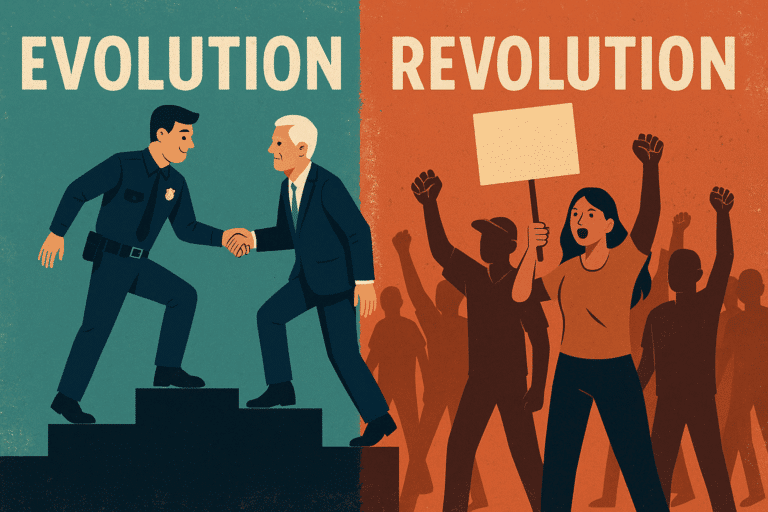
Simon Sinek often frames it this way, “You can force a revolution that jolts people from here to that, or you can lead an evolution that helps them move from here to there.” Most people do not fear change itself, they fear the loss of control and the uncertainty that comes with it. If we want change to stick, we have to anchor it in a clear why, explain how the transition will work, and meet emotion with empathy rather than slide decks. When leaders do that, resistance softens and the path from today to tomorrow becomes something people can walk together.
Most “change management” talks miss this. We tell people what is changing, show the deck, quote the data, and wonder why eyes glaze over. People do not resist because they cannot read a chart. They resist because change often lands as a surprise that threatens what is working for them. Facts alone cannot calm an emotional reaction.
Think about the last time your agency rolled out a new schedule, RMS, body camera workflow, or policy. If it dropped overnight, the pushback was loud. If leaders took time to explain the why, showed what would stay the same, piloted it with a few teams, and invited feedback before full launch, the tone was different. Same change. Different approach. Better outcome.
Three leadership takeaways for aspiring leaders
1) Lead with empathy before strategy
Before you present the plan, ask what people fear losing. Is it competence, control, routine, status, or time with family. Name it out loud. When people feel seen, they can hear the plan.
2) Make the path visible
Show the why, the how, and the when. Break change into steps with clear checkpoints, training, and a feedback loop. Evolution beats revolution because it gives people time to adjust and practice.
3) Co-create small wins
Pilot the change with a willing team. Learn in public. Celebrate what works, own what does not, and adjust. When others see peers shaping the future, adoption follows.
Change that is explained, paced, and co-created builds trust. Change that is announced, rushed, and enforced breeds frustration. In a profession that already asks people to live with uncertainty, our job as leaders is to remove unnecessary uncertainty where we can.
The goal is not to flip the switch. The goal is to bring people with you. Start with why, meet emotion with empathy, and lead an evolution from here to there. This is how we honor the work, strengthen the culture, and make progress that lasts.