
Being the “Stupidest” in the Room is the Smartest Thing a Leader Can Do
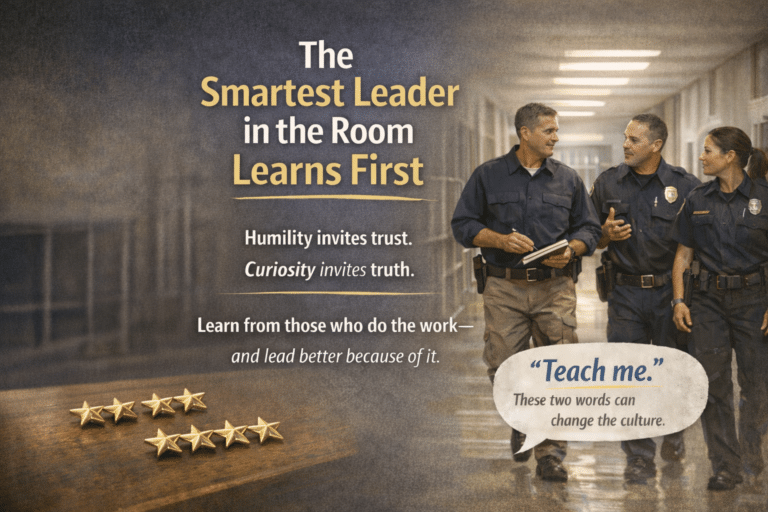
Great leadership extends beyond holding rank or making decisions. It’s about creating the conditions where the best answers can surface. The fastest way to do that is to lead like a learner. This approach is not about pretending. Rather, it’s about humility and curiosity. It is about admitting what you do not know and inviting the people who do know to show you. That posture changes a room. It builds trust on a different level. It accelerates learning far more than any briefing ever will.
When I first joined the Sheriff’s Office, I came in as an “outsider,” as a police chief from “…the PD world.” I understood that each organization had a different culture and that trust had to be earned, regardless of my rank and title. I took an approach which confused and surprised many. I put ego aside and chose to be the stupidest person in the room. Not because I lack experience, but because I want to learn fast, build trust, and see the truth of the organization through the eyes of the people who do the work.
I’d often remove my rank insignia and spend shifts walking our jail facilities, not to inspect or critique, but to learn. I knew how to search a car on the street but did not know the nuances to searching a jail cell and actually find contraband in the places a veteran corrections officer would look. So I flipped the power dynamic. I took off my rank, figuratively and literally, and asked the team to teach me. They showed me how to read the space, where to look, what patterns matter, and why tiny details can signal bigger issues. Their pride showed. Their expertise was unmistakable. I left smarter, and they left knowing their knowledge mattered to the person responsible for operations.
Other times I rode with patrol across different bureaus in different parts of the county. I treated every opportunity, interaction, and call as a masterclass for me to learn from those who do the job best. After some initial discomfort (maybe shock) of having an executive team member hanging out with them, you could see the walls and barriers breaking down. Trust and communication quickly followed. I asked what was working, what was getting in the way, and what they would change if they had my job for a week. I listened for what they said and for what went unsaid. By the end of those days, I did not just have notes. I had relationships. The people who taught me felt seen. The insights they offered started shaping decisions that affected their daily reality.
When a leader says, “Teach me,” the culture shifts. People begin to speak up. They share the workaround that keeps failing. They point to the policy that makes sense on paper but breaks under pressure. They offer ideas they have carried quietly for years. None of that happens when ego fills the space. It happens when curiosity does.
Feeling like the least knowledgeable person in the room can be uncomfortable. That discomfort is a signal. It means you are exactly where growth lives. It means you are surrounded by expertise you can learn from. It means you have a chance to build trust by honoring the people who keep the place running.
Here is what this looks like in practice.
- Observe without judgment. Walk the halls, ride the beat, sit in on roll call and intake. Attend the trainings (and be an active participant). Watch how decisions are made under pressure. Notice what creates friction and what creates flow.
- Ask simple, honest questions. What am I missing? What would you change? How would you do this if you were me? The obvious questions are often the ones no one has asked out loud.
- Document and reflect. Capture what you learn, then close the loop. You are likely in a position to fix or change a lot of the things you were unaware of. Share back what you heard and what you will try. People do not expect perfection. They do expect to be heard.
- Credit the teachers. When an idea you implement came from a deputy, a corrections officer, or a professional staff member, say so. Credit builds trust. Trust fuels more truth telling.
- Turn learning into action. Small changes compound. Fix the nagging issue with equipment. Adjust a schedule that creates avoidable stress. Remove a process step that wastes time. When people see action, belief grows.
This mindset has changed how I lead. It taught me that authority can either shut a room down or open it up. It reminded me that competence is not the same as confidence, and that curiosity is the quickest way to both. Most of all, it reinforced a simple truth we talk about at The Curve. Leadership is not about being in charge. It is about taking care of those in your charge. Taking care begins with respect. Respect begins with listening. Listening begins with the humility to learn.
When leaders model this, the culture follows. Middle managers feel permission to ask for help instead of pretending. New supervisors learn it is safe to say “I do not know yet” and then go find out. Line staff begin to raise issues early, not after a crisis. Psychological safety grows, and with it, creativity and ownership. The organization gets smarter because the people who understand the work best are shaping how the work is done.
Other considerations:
- Sit in the seat of the people you lead, literally. Shadow a dispatcher for an hour. Search a cell with a veteran. Ride with days, then nights, then weekends.
- Normalize “I do not know yet.” Make it a strength. Follow it with “Let’s find out together,” then do it.
- Close the loop quickly. Within a week, send back what you heard, what you will test, and when you will check progress.
You do not lose authority by being the student. You earn trust. You speed up learning. You make better decisions. And you show the entire organization that growth is not a threat, it is the path. The day you walk into a room and feel outmatched is the day you have the best chance to become a better leader. Lean in. Ask the questions. Let your people teach you. Then act.
Leadership Takeaways
- Curiosity over ego. Admit what you do not know and ask to be taught. It builds trust and unlocks practical insight.
- Rooms are classrooms. Treat walk-throughs, ride-alongs, and briefings as learning labs, not performance checks.
- Close the loop. Share what you heard, what you will do, and who taught you. Credit and action create momentum.
- Make it safe to speak. Your humility gives others permission to be honest. Honesty is the fuel of a high-trust culture.
- Turn learning into better service. Apply insights to policies, training, and deployment so your people can protect the vulnerable at their best.
-Chris Hsiung